




What is ABA Therapy

What Is ABA Therapy ?

Applied Behavior Analysis (ABA) is an evidence-based, science-driven approach that helps children build meaningful skills and reduce barriers that get in the way of daily life. ABA uses positive reinforcement and carefully planned teaching to improve learning, communication, social connection, and independence.

At the Inspire Center for Autism, every child’s plan is individualized—there’s no “one-size-fits-all.” A Board Certified Behavior Analyst (BCBA) designs the treatment plan and closely supervises therapy delivered one-to-one by Registered Behavior Technicians (RBTs). Together, your care team targets goals that matter to your family and your child.

Core Principles of ABA

Centered on your child’s strengths, interests, and family priorities.
Celebrating effort and success to encourage more of the skills you want to see.
We measure progress every session and adjust the plan to keep growth on track.
Skills are practiced in different settings so your child can use them at home, school, and in the community.

ABA Therapy Can Assist With…

Requesting needs, expressing feelings, back-and-forth conversation.
Sharing, turn-taking, group activities, making friends.
Dressing, toileting, feeding, hygiene, following routines.
Attention, following instructions, fine/gross motor skills, learning-to-learn behaviors.
Elopement prevention, waiting, tolerating changes, self-advocacy.
Replacing challenging behavior with safer, more effective ways to communicate.
Inspire Website Imagery.aba3
46

How Does ABA Therapy Work?

Applied Behavioral Analysis Therapy helps children develop critical life skills through personalized treatment and positive reinforcement. It is one of the most widely researched, evidence-based therapies for children on the autism spectrum.

Our Step-By-Step Approach

We learn about your child, your goals, and any current support. We also discuss scheduling and benefits/coverage.
A BCBA completes assessments (observations, caregiver interviews, standardized tools) to understand strengths, needs, and why certain behaviors occur.
We set clear, meaningful goals with measurable criteria and create strategies for teaching and support. If needed, we also design a Behavior Intervention Plan (BIP) focused on safety and skill replacement.
RBTs provide in-center therapy under BCBA supervision. A BCBA designs goals that reflect your child’s strengths and your family’s priorities. Sessions mix structured teaching with naturalistic, play-based learning to keep children engaged and motivated.
We teach practical strategies you can use at home and in the community so progress carries over beyond the clinic.
We graph progress, review results with you, and adjust targets and methods to keep growth steady.
With your permission, we coordinate with schools, speech/OT providers, and physicians. We also plan transitions (e.g., to preschool, kindergarten) to support lasting success.

Our Teaching Strategies

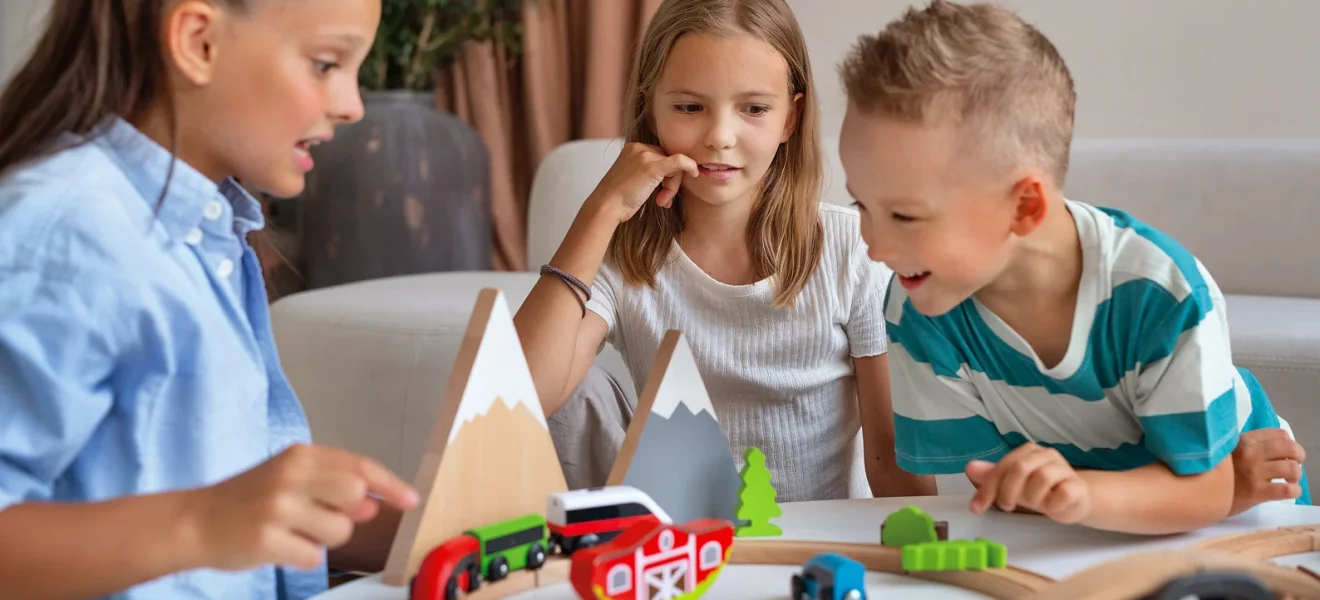
Natural Environment Teaching (NET) and Play-Based Learning

What it is: Teaching in everyday activities your child already enjoys—play, snack, routines—so skills grow where they’re naturally used.

When we use it: To build communication, social skills, flexibility, and generalization across people/places.

Discrete Trial Teaching (DTT)

What it is: Highly structured, step-by-step teaching that breaks a skill into clear, teachable parts and practices them in short “trials.”

When we use it: Used for step-by-step skill acquisition. For early learning (matching, imitation), language foundations, academic readiness, or when a skill needs precise shaping.

Pivotal Response & Early-Learner Methods

What it is: Research-supported, play-centered strategies (including Pivotal Response Treatment) that target “pivotal” areas—motivation, responding to multiple cues, self-management, and initiations—so many skills improve at once.

When we use it: To boost motivation, engagement, spontaneous language, and flexible responding—especially with early learners.

Functional Communication Training (FCT)

What it is: Teach a clear, appropriate communication (spoken word, sign language , picture, or augmentative and alternative communication (ACC) that serves the same function as challenging behavior—so the behavior becomes unnecessary.

When we use it: Used to replace challenging behavior with communication. When behaviors are happening to get access to something, escape, attention, or for sensory reasons.

Task Analysis, Prompting & Fading, Shaping, Chaining

What it is: A toolkit to build independence and for teaching complex skills independently and kindly.

Task Analysis breaks a routine into small steps with continuous practice and reinforcement.

Visual Supports & Token Systems

What it is: Tools that make time, expectations, and choices visible—reducing uncertainty and making success predictable and fun.

Visual supports include First/Then boards, Visual schedules, Choice boards, Countdowns/timers, transition warnings, and more.

Tokens are earned for specific behaviors; exchanged for a chosen reward.

How We Choose (and Adapt) Methods

A BCBA matches methods to your child’s goals, learning style, and motivation.

We blend strategies (e.g., DTT to teach a new word, then NET to use it in play).

We collect data every session, review with you, and adjust to keep progress moving.

We emphasize assent-based, compassionate care—prioritizing dignity, autonomy, and meaningful outcomes.

Frequently Asked Questions

What is Autism?
Autism Spectrum Disorder (ASD) is a developmental condition that affects how a child communicates, interacts socially, and processes information. Autism is a spectrum, meaning symptoms and abilities vary widely from one child to another.
Who can benefit from ABA therapy?
ABA therapy is most commonly used to support children with Autism Spectrum Disorder (ASD), but it can also benefit individuals with other developmental challenges. It is especially effective when started early and tailored to each individual’s needs.
What does a typical ABA therapy session look like?
A typical session includes 1:1 instruction with a trained ABA therapist, using play-based or structured tasks to work on goals such as communication, social interaction, behavior regulation, and daily living skills. Sessions may occur at home, in a clinic, or in community settings.
What age range do you serve?
We work with children ages 1-17 years of age.
How is autism diagnosed?
A formal autism diagnosis is typically made by a licensed pediatrician, psychologist, or developmental specialist. The evaluation may include:

Parent interviews

Developmental history

Observation of behavior

Standardized tools such as the ADOS-2 (Autism Diagnostic Observation Schedule)
What insurance do you accept?
We accept most major insurance plans, including Aetna, Cigna, United Healthcare, Blue Cross Blue Shield, and Medicaid options where applicable. Our team can help verify your benefits and guide you through the approval process.
Cart (0 items)