Choosing ABA Agencies Near Me: A Parent's Guide
Find the right ABA agencies near me with our expert guide. Learn to spot green flags, understand insurance.

Choosing the right ABA agency for your child is a critical decision. To find the best fit, you must evaluate their therapy approach, staff qualifications, and family involvement. At Inspire Center for Autism, our BCBA-designed, play-based programs deliver compassionate and effective care, making us a trusted partner for families.
Table of contents
- What is Applied Behavior Analysis (ABA) Therapy?
- Key Criteria for Evaluating Local ABA Providers
- How Does the Therapy Environment Affect My Child's Progress?
- What Role Should My Family Play in ABA Therapy?
- Understanding Insurance for ABA Therapy
- Frequently asked questions
What is Applied Behavior Analysis (ABA) Therapy?
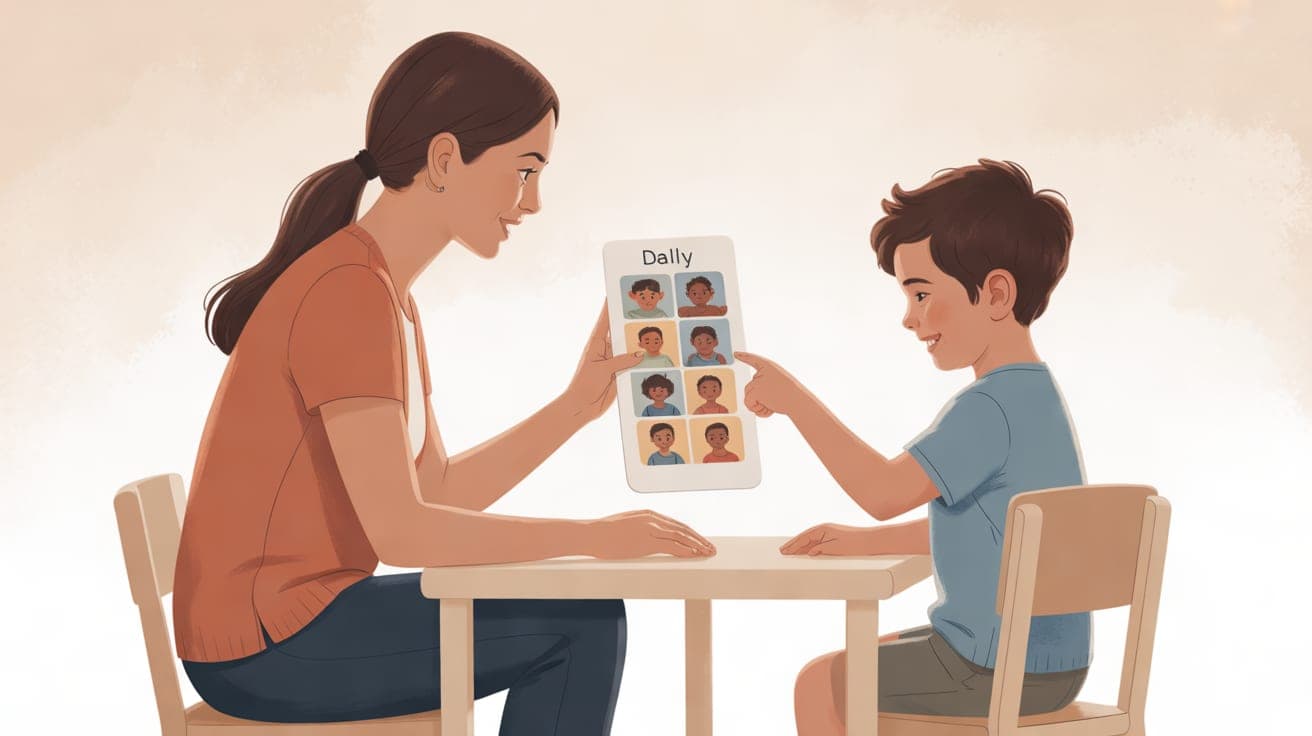
Applied Behavior Analysis (ABA) therapy is an evidence-based scientific discipline that focuses on understanding and improving human behavior. For children with autism, ABA is used to build essential skills and reduce behaviors that interfere with learning and daily life. The core principle is that behaviors followed by positive reinforcement are more likely to be repeated. Through systematic and individualized instruction, therapists help children develop critical abilities in communication, social interaction, self-care, and academics. Unlike a one-size-fits-all curriculum, a high-quality ABA program is tailored to your child's unique strengths, needs, and motivations. To learn more about the fundamentals, you can explore what ABA therapy is and how it empowers children to thrive.
Key Criteria for Evaluating Local ABA Providers
Finding the best local ABA provider requires looking beyond a convenient location and asking targeted questions about their methods, staff, and philosophy. The right center becomes a partner in your child's development, so a thorough evaluation is crucial. Use the following criteria to compare providers and identify an agency that aligns with your family’s values and your child's needs.
| Criteria | What to Look For (Green Flags) | What to Avoid (Red Flags) |
|---|---|---|
| Individualization | The agency conducts a comprehensive initial assessment (like the VB-MAPP or ABLLS-R) and creates a unique treatment plan. Goals are functional, meaningful to your child, and updated regularly based on progress. | A generic, one-size-fits-all curriculum is applied to all children. Goals seem irrelevant to your child's daily life or are not adjusted over time. |
| Staff Qualifications | Programs are designed and consistently supervised by a Board Certified Behavior Analyst (BCBA). Direct therapy is provided by trained Registered Behavior Technicians (RBTs) who receive frequent supervision. | Lack of a full-time BCBA on staff. Unclear supervision structure or therapists who are not certified or in the process of certification. High staff turnover. |
| Therapy Approach | The approach is positive, compassionate, and play-based (Natural Environment Teaching). The focus is on building skills through your child's interests and motivation. | The therapy seems overly rigid, repetitive, or punitive. The environment feels clinical and cold, with little joy or natural interaction. |
| Family Involvement | The agency offers regular parent training and communication. Therapists actively collaborate with you to set goals and ensure skills are transferring to home and community settings. | Parents are viewed as observers rather than partners. There are limited opportunities for training or involvement in your child's program. |
| Data & Progress | The agency uses objective data collection to track your child's progress daily. You receive regular, easy-to-understand reports and meet with the BCBA to review progress and adjust goals. | Progress is described in vague, subjective terms ("he's doing better"). Data is not collected consistently or is not shared with you. |
How Does the Therapy Environment Affect My Child's Progress?
The environment where your child receives therapy plays a significant role in their success. ABA can be delivered in-home, in-school, or at a specialized center. At Inspire Center for Autism, we offer both in-center and hybrid programs because we see the value in a dedicated therapeutic space. A center-based setting can offer a structured environment, which may have fewer household distractions, and is equipped with a wide range of therapeutic toys and learning materials. Depending on the program and the child's needs, it can also provide consistent, natural opportunities for your child to practice social skills with peers in a supervised setting—something that can be more challenging to replicate in one-on-one home therapy. Our Mesa center is a convenient option for families seeking expert ABA therapy in Gilbert and other nearby communities.
What Role Should My Family Play in ABA Therapy?
Caregiver involvement can help support progress, and a quality agency will work with your family in ways that fit your needs and availability. The most effective ABA programs are not something that is simply done to a child for a few hours a day; they are a collaborative effort to create lasting change. A quality agency will prioritize parent and caregiver training. This involves teaching you the principles of ABA so you can understand the function of your child's behavior and learn strategies to support skill development and manage challenging moments at home. This partnership ensures consistency between the therapy center and your home, which helps your child generalize their new skills to different people and environments. This collaborative approach is a powerful way to support your child's progress for the long term.
Understanding Insurance for ABA Therapy
Navigating insurance coverage is often one of the first hurdles for families seeking ABA services. The good news is that many health plans cover ABA therapy, but the specifics can be complex. Coverage for ABA depends on your plan’s benefits, eligibility rules, and authorization requirements. In Arizona, some health plans are required to cover autism treatment, but benefits and eligibility vary significantly by plan. It's crucial to contact your insurer and potential providers to confirm your specific coverage, costs (like copays or deductibles), and any pre-authorization requirements. An experienced agency should have a dedicated team to help you verify your benefits and handle the authorization process with your insurance company. They can help you submit authorization requests and understand the insurer’s decision. For more detailed information, we've compiled a guide on navigating ABA therapy insurance.
Choosing an ABA agency is a significant decision for your family. By focusing on individualized care, qualified staff, and a true partnership approach, you can find a provider that aligns with your family's goals and can support your child in building meaningful skills. If you are in Mesa or the surrounding East Valley, we invite you to learn more about our approach.
Contact Inspire Center for Autism at 7205 E Southern Ave #115, Mesa, AZ 85209, or call (480) 269-7709 today to schedule a tour and discuss how our individualized ABA programs can support your child’s journey. Let’s work together to help your child shine.
Frequently asked questions
What is behavioral therapy for kids with autism?
Behavioral therapy for kids with autism is a structured approach designed to improve social, communication, and learning skills while reducing behaviors that interfere with development. The most well-known and evidence-based form is Applied Behavior Analysis (ABA), which uses positive reinforcement to teach new skills and shape behavior in a meaningful, functional way.
What qualifications should therapists at an ABA agency have?
Therapists at a reputable ABA agency should have specific credentials. Programs must be designed and overseen by a Board Certified Behavior Analyst (BCBA), who holds a master's degree and has passed a rigorous national exam. Direct, day-to-day therapy is typically provided by a Registered Behavior Technician (RBT), who has completed required training, passed a competency assessment and a national exam, and works under the close supervision of the BCBA.
How can I find local autism resources and support groups?
To find local autism resources, start by contacting your state's Division of Developmental Disabilities or your local school district. Organizations like The Autism Society often have local chapters with extensive resource lists. Additionally, your chosen ABA provider, pediatrician, or neurologist can be an excellent source for referrals to support groups, recreational programs, and other community services.
How is progress measured in ABA therapy?
Progress in ABA therapy is measured through direct observation and systematic data collection. Therapists record data on specific skills and behaviors during every session. This data is then graphed and analyzed by the supervising BCBA to track progress, identify patterns, and make objective, data-driven decisions about when to adjust the treatment plan or introduce new goals.
Is center-based or in-home ABA therapy better?
Neither is definitively "better," as the best fit depends on the child’s individual needs and the program. A center-based program may offer peer interaction and a structured setting, while in-home therapy may help a child practice skills in their everyday routines. The right choice often comes down to the specific goals being targeted.
How long does a child typically need ABA therapy?
The duration of ABA therapy varies significantly from child to child. It depends on the child’s age, the scope of their goals, and the intensity of the program. Some children may need a comprehensive program for several years, while others may benefit from a more focused, short-term approach to target specific skills. Progress is continually assessed to determine the appropriate length of care.
What is the relationship between ABA therapy and "stimming"?
Stimming, or self-stimulatory behavior, refers to repetitive actions like hand-flapping or rocking. For many autistic people, it can support self-regulation or communication. Stimming does not need to be stopped just because it looks different. If a stim causes harm or distress, limits activities the child wants or needs to access, or the child wants help finding alternatives, the therapist can work with the child and family to understand its purpose and explore safe, supportive options while respecting harmless stimming.
About the author
Zachary Rudolph — Founder & CEO
- Tags:
- aba therapy
- autism resources
- mesa az
- choosing an aba provider
- parent guide
Frequently asked questions
What is behavioral therapy for kids with autism?
Behavioral therapy for kids with autism is a structured approach designed to improve social, communication, and learning skills while reducing behaviors that interfere with development. The most well-known and evidence-based form is Applied Behavior Analysis (ABA), which uses positive reinforcement to teach new skills and shape behavior in a meaningful, functional way.
What qualifications should therapists at an ABA agency have?
Therapists at a reputable ABA agency should have specific credentials. Programs must be designed and overseen by a Board Certified Behavior Analyst (BCBA), who holds a master's degree and has passed a rigorous national exam. Direct, day-to-day therapy is typically provided by a Registered Behavior Technician (RBT), who has completed required training, passed a competency assessment and a national exam, and works under the close supervision of the BCBA.
How can I find local autism resources and support groups?
To find local autism resources, start by contacting your state's Division of Developmental Disabilities or your local school district. Organizations like The Autism Society often have local chapters with extensive resource lists. Additionally, your chosen ABA provider, pediatrician, or neurologist can be an excellent source for referrals to support groups, recreational programs, and other community services.
How is progress measured in ABA therapy?
Progress in ABA therapy is measured through direct observation and systematic data collection. Therapists record data on specific skills and behaviors during every session. This data is then graphed and analyzed by the supervising BCBA to track progress, identify patterns, and make objective, data-driven decisions about when to adjust the treatment plan or introduce new goals.
Is center-based or in-home ABA therapy better?
Neither is definitively "better," as the best fit depends on the child’s individual needs and the program. A center-based program may offer peer interaction and a structured setting, while in-home therapy may help a child practice skills in their everyday routines. The right choice often comes down to the specific goals being targeted.
How long does a child typically need ABA therapy?
The duration of ABA therapy varies significantly from child to child. It depends on the child’s age, the scope of their goals, and the intensity of the program. Some children may need a comprehensive program for several years, while others may benefit from a more focused, short-term approach to target specific skills. Progress is continually assessed to determine the appropriate length of care.
What is the relationship between ABA therapy and "stimming"?
Stimming, or self-stimulatory behavior, refers to repetitive actions like hand-flapping or rocking. For many autistic people, it can support self-regulation or communication. Stimming does not need to be stopped just because it looks different. If a stim causes harm or distress, limits activities the child wants or needs to access, or the child wants help finding alternatives, the therapist can work with the child and family to understand its purpose and explore safe, supportive options while respecting harmless stimming.

Founder & CEO
The clinical team at Inspire Center for Autism — Arizona-licensed BCBAs and Registered Behavior Technicians serving families across the East Valley from our Mesa center.