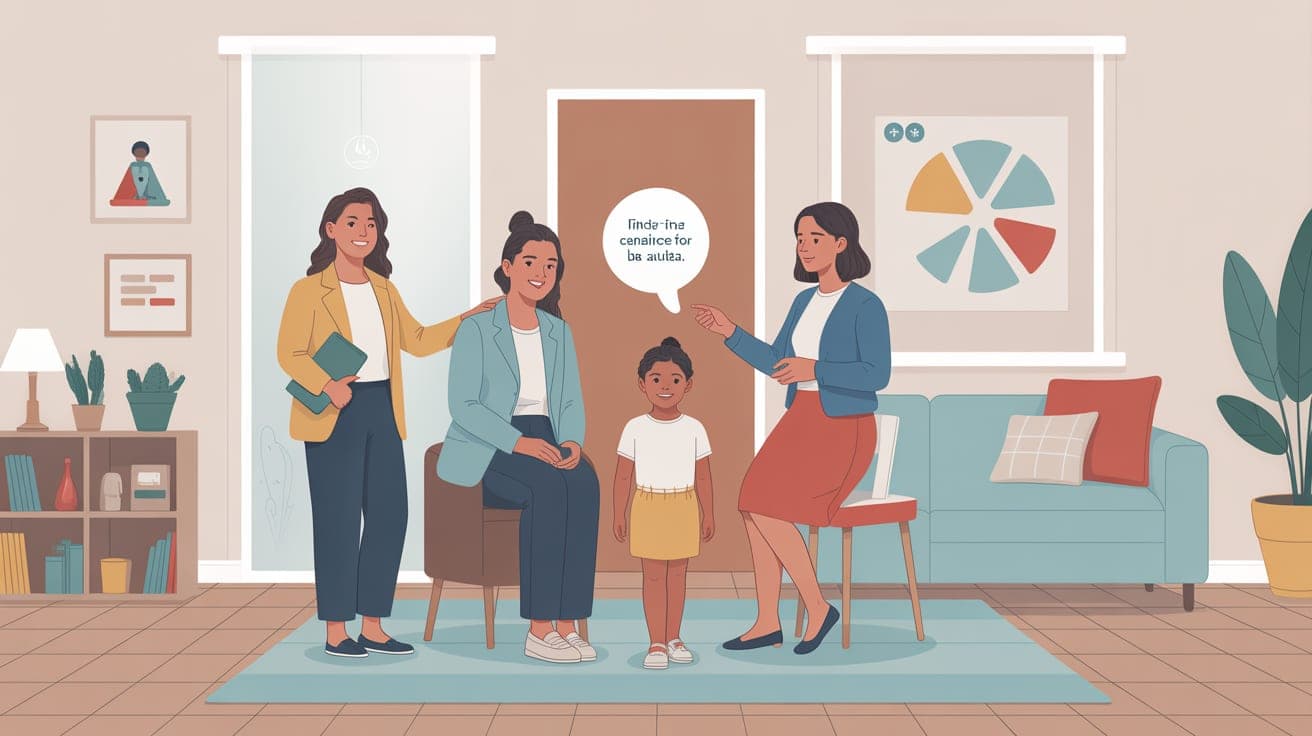
Manding ABA Therapy: Empowering Your Child's Voice
Unlock your child's voice with manding ABA therapy. Discover strategies from Inspirecenterforautism to empower communication, foster independence, and reduce frustration.
Last updated: September 18, 2026
Manding in ABA therapy is a foundational technique that teaches your child how to request their wants and needs. This skill is driven by their own motivation, empowering them to communicate effectively. At Inspirecenterforautism, we see firsthand how this pivotal skill transforms a child's ability to interact with their world. Learning to mand reduces frustration, builds independence, and opens the door to more complex social interactions.
Table of contents
- What Is a "Mand" in ABA Therapy?
- Why Is Manding a Cornerstone of ABA Therapy for Autism?
- How Do We Teach Manding in ABA Therapy?
- Common Manding Methods Used in ABA
- How to Support Your Child's Manding Practice at Home
- Empower Your Child's Voice with Inspirecenterforautism
- Frequently Asked Questions About Manding in ABA
What Is a "Mand" in ABA Therapy?
A mand is a type of verbal behavior that is, simply put, a request. The term, coined by B.F. Skinner, is short for “demand” or “command.” Unlike other forms of speech, a mand is controlled by motivation. This is the critical mechanism: your child wants something, they say or signal what they want, and they get it. This direct relationship between their communication and a desired outcome is what makes manding so powerful.
For example, if a child sees a cookie on the counter and says, “Cookie,” that is a label, or a “tact.” But if a child wants the cookie and says, “Cookie,” to get it, that is a mand. The motivation (wanting the cookie) is the driving force. The consequence (receiving the cookie) directly reinforces that specific communication, making them more likely to use it again when they are motivated for a cookie. This distinction is fundamental to how we approach communication in manding ABA therapy.
Why Is Manding a Cornerstone of ABA Therapy for Autism?
Manding is crucial because it gives your child direct control over their environment and reduces the problem behaviors often caused by an inability to communicate. When a child cannot express their needs and wants, frustration builds. This frustration can manifest as crying, screaming, aggression, or self-injury. These behaviors are often a desperate, albeit ineffective, attempt to communicate.
Teaching a child to mand provides a functional, appropriate replacement for these challenging behaviors. It builds a bridge between their internal desire and the outside world. The primary benefits include:
- Reduced Challenging Behaviors: By providing a direct way to ask for a break, a snack, or a favorite toy, manding eliminates the need for problem behaviors to serve that purpose.
- Increased Independence: A child who can mand can get their needs met without an adult having to guess or anticipate them. This is a fundamental step toward self-advocacy and independence in daily life.
- A Foundation for Social Interaction: Requesting is one of the earliest and most essential forms of social engagement. It teaches a child that their communication impacts others and that interaction is valuable and rewarding.
- Enhanced Motivation to Communicate: When a child learns that their words, signs, or pictures have power, they become more motivated to communicate in general. Language is no longer just an academic exercise; it's a tool that works for them.
How Do We Teach Manding in ABA Therapy?
We teach manding in ABA therapy by systematically creating and capturing motivation, prompting the request, and immediately reinforcing it with the desired item or activity. Our Board Certified Behavior Analysts (BCBAs) at Inspirecenterforautism design individualized programs that follow a clear, evidence-based process.
- Identify Motivators: The first step is to discover what truly motivates your child. This goes beyond just what they like. Through preference assessments, our therapists identify what your child wants right now. This could be a specific toy, a type of snack, a piggyback ride, or even just a moment of tickles.
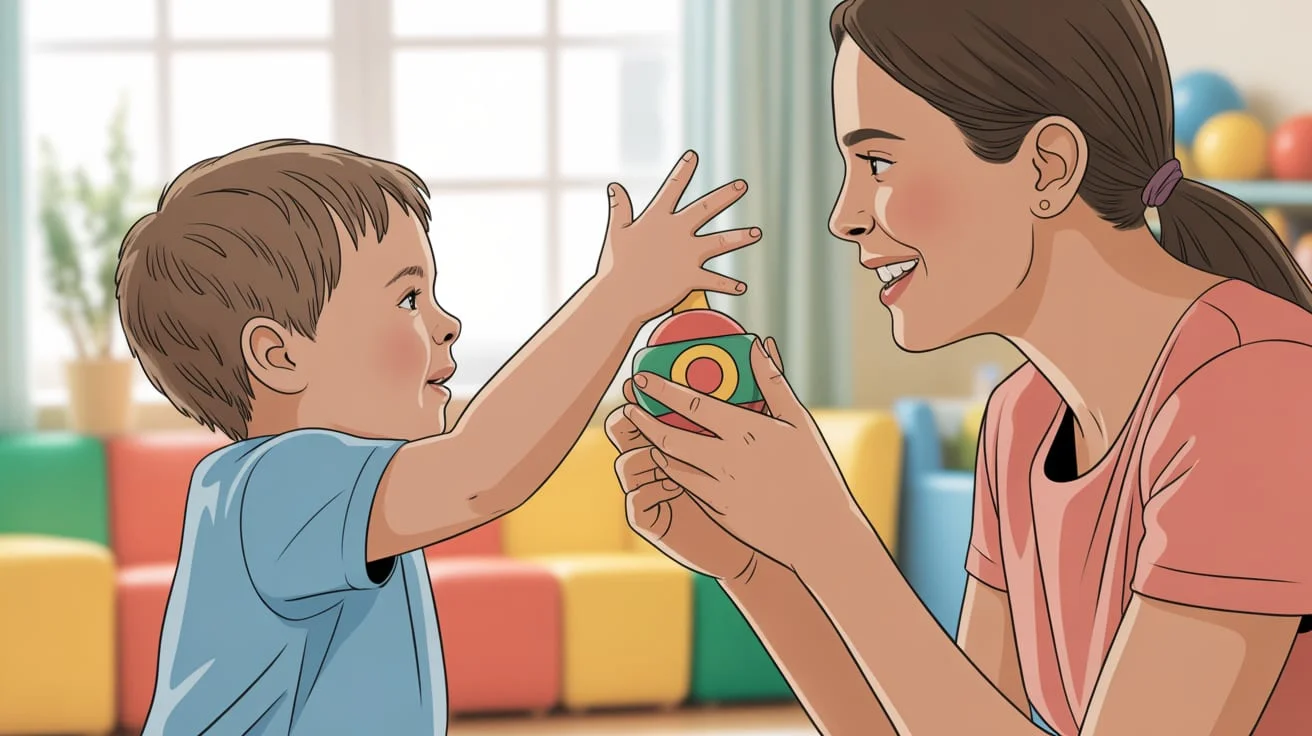
- Contrive Opportunities: We create situations where the child will be motivated to ask for something. For example, a therapist might give your child a toy that requires a battery but not provide the battery, creating a natural reason to mand for “battery” or “help.” Or they might start blowing bubbles, a favorite activity, and then suddenly stop, motivating the child to ask for “more.”
- Prompt and Fade: The therapist will then prompt the correct mand. This might be a full verbal model (“Say ‘bubbles’”), a partial prompt (“buh…”), or simply an expectant look. As soon as the child makes the request—even if it's an approximation—they are immediately reinforced. The goal is to fade these prompts as quickly as possible so the child’s request becomes independent.
- Reinforce Immediately: The reinforcement for a mand is the specific thing that was requested. If the child mands for “juice,” they get juice. This one-to-one correspondence is what solidifies the skill. It creates a powerful learning loop: I ask, I get.
Common Manding Methods Used in ABA
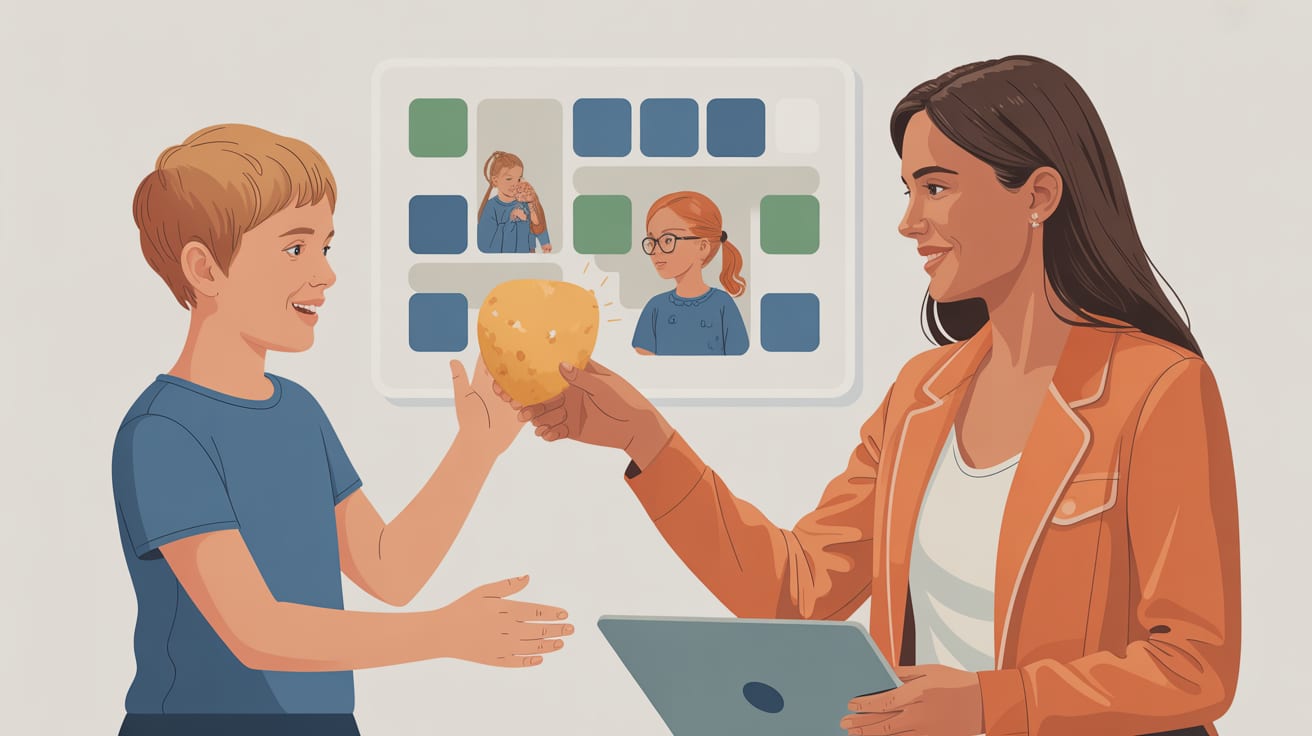
In ABA, manding isn't limited to spoken words. A child can learn to mand using various methods, including sign language, a Picture Exchange Communication System (PECS), or a speech-generating device (SGD), depending on their individual abilities and needs. The best method is the one that allows your child to communicate their needs most effectively and efficiently. There is no one-size-fits-all solution, and the choice involves real trade-offs.
Our team helps families navigate this decision by considering your child's specific strengths and challenges. Here is a comparison of common manding methods:
| Communication Method | Best For | Key Considerations |
|---|---|---|
| Spoken Words | Children with emerging vocal skills or who can imitate sounds. | The most universally understood method; can be challenging for children with apraxia or significant vocal delays. |
| Sign Language | Children with good fine motor skills but challenges with vocal production. | Can be a bridge to speech; requires communication partners to understand the signs. |
| PECS | Non-vocal children who can discriminate between pictures and initiate communication. | Teaches initiation without verbal prompts; requires a communication book and partner training. |
| Speech-Generating Device (SGD) | Children who need a robust vocabulary and can use a tablet or dedicated device. | Offers a clear vocal output for anyone to understand; can be expensive and requires programming and maintenance. |
How to Support Your Child's Manding Practice at Home
You can support manding at home by creating opportunities for your child to request, modeling the language yourself, and honoring their communication attempts immediately. Consistency between the center and home is key to helping your child generalize these vital skills, making the principles of manding ABA therapy a part of everyday life. Here are a few practical strategies you can use:
- Arrange the Environment: Place favorite items in view but out of reach, such as on a high shelf or in a clear, sealed container. This creates a natural motivation to ask for the item.
- Provide Incomplete Activities: Give your child a bowl of cereal but not the spoon, or a coloring book but not the crayons. This creates a simple, low-stress problem that they can solve by manding for the missing item.
- Offer Choices: Instead of anticipating their needs, hold up two options (e.g., an apple and a banana) and wait for them to indicate which one they want. You can model the word for them as you give them their choice.
- Model Your Own Mands: Narrate your own wants and needs throughout the day. “I want some water.” “I need help opening this jar.” This shows your child how communication is used naturally.
- Honor All Attempts: Early on, the goal is successful communication, not perfect pronunciation. If your child points and says “ba” for a ball, honor that attempt by giving them the ball while clearly modeling, “Ball! You want the ball.”
Empower Your Child's Voice with Inspirecenterforautism
Empowering your child's voice is a journey, and you don't have to walk it alone. The individualized programs at Inspirecenterforautism are designed by our BCBAs to build these foundational communication skills. To learn more about what ABA therapy is and how our manding ABA therapy programs can support your family in Mesa, Arizona, contact us today to schedule a consultation.
Inspire Autism LLC — 7205 E Southern Ave #115, Mesa, AZ 85209 — (480) 269-7709
Frequently Asked Questions About Manding in ABA
In ABA, is manding just for asking for toys and food? No, manding is much broader. It starts with tangible items like toys and food because the motivation is clear, but it expands to requesting actions ("push," "tickle"), help ("open"), information ("where's mommy?"), and even the removal of things a child doesn't want ("all done").
What if my child is non-verbal? Can they still learn to mand? Absolutely. Manding is about requesting, not just speaking. A non-verbal child can learn to mand using sign language, a picture exchange system (PECS), or a speech-generating device. The goal is functional communication, regardless of the form it takes.
Will teaching my child to mand make them more demanding? This is a common concern, but teaching manding actually tends to decrease demanding behaviors. It replaces crying, grabbing, or tantrums with appropriate communication. It teaches your child a respectful and effective way to have their needs met, which often leads to more cooperation.
How is a mand different from a tact (or label) in ABA? This is a key distinction in ABA. Labeling (a "tact") is controlled by what you see ("That's a car"). Manding (a "mand") is controlled by what you want ("I want the car"). Manding is a request, while a tact is a comment. We prioritize teaching manding first because it has a direct, powerful benefit for the child.
How long does it take for a child to learn manding in ABA therapy? The timeline varies for every child based on their starting skills, motivation, and the consistency of practice. Some children pick up their first mands within a few sessions, while building a diverse manding repertoire is an ongoing process that becomes a natural part of their communication.
- Tags:
- aba therapy
- manding
- autism communication
- verbal behavior
- parent resources
Frequently asked questions
Is manding just for asking for toys and food?
No, manding is much broader. It starts with tangible items like toys and food because the motivation is clear, but it expands to requesting actions ("push," "tickle"), help ("open"), information ("where's mommy?"), and even the removal of things a child doesn't want ("all done").
What if my child is non-verbal? Can they still learn to mand?
Absolutely. Manding is about requesting, not just speaking. A non-verbal child can learn to mand using sign language, a picture exchange system (PECS), or a speech-generating device. The goal is functional communication, regardless of the form it takes.
Will teaching my child to mand make them more demanding?
This is a common concern, but teaching manding actually tends to decrease demanding *behaviors*. It replaces crying, grabbing, or tantrums with appropriate communication. It teaches your child a respectful and effective way to have their needs met, which often leads to more cooperation.
How is manding different from just labeling things?
This is a key distinction in ABA. Labeling (a "tact") is controlled by what you see ("That's a car"). Manding (a "mand") is controlled by what you *want* ("I want the car"). Manding is a request, while a tact is a comment. We prioritize teaching manding first because it has a direct, powerful benefit for the child.
How long does it take for a child to learn to mand?
The timeline varies for every child based on their starting skills, motivation, and the consistency of practice. Some children pick up their first mands within a few sessions, while building a diverse manding repertoire is an ongoing process that becomes a natural part of their communication.

Inspirecenterforautism
The clinical team at Inspire Center for Autism — Arizona-licensed BCBAs and Registered Behavior Technicians serving families across the East Valley from our Mesa center.